
Hello everyone, my name is Suproja, and I am a postgraduate student studying for an MA in English Literature at the University of Exeter. I am from India, and like many international students, I arrived here carrying more than just suitcases. I carried habits, tastes, routines, and an expectation that food would somehow feel the same.
In the first few days of living in Exeter, food feels like a simple task. You walk into supermarkets, pick up what looks familiar, and assume that everything will fall into place. But very quickly, something feels different. The flavours are lighter. The spices are softer. Meals feel quicker, almost functional, rather than layered and slow the way they often are back home. And in those small, quiet moments, you realise that food is not just about eating. It is about memory. It is about comfort. It is about belonging. And when that shifts, even slightly, you feel it.

Learning to cook. Learning to live.
One of the most helpful things I discovered was this: you do not need complicated recipes to survive, or even to feel at home.
You need a mental list of simple meals you can fall back on. Easy meals. Affordable meals. Meals that feel familiar, even if they are slightly different from what you once knew. Because cooking can be more than a task. It can become a way of rebuilding your everyday life.
Halal food: Finding familiarity through choice
For many international students, especially those who follow halal dietary practices, food is not only about taste or budget, but also about trust and awareness.
When I first arrived in Exeter, this was something I had not fully thought through. It is easy to assume that everything will be available in the same way it is back home. But here, I’ve learned to read labels more carefully, to ask questions, and to become more conscious of what I’m choosing.
Over time, however, the city begins to reveal its quiet support.
Many larger supermarkets such as Tesco, Sainsbury’s, and Aldi often stock clearly labelled halal products alongside a wide range of vegetarian and vegan alternatives, making everyday shopping more accessible for international students.

Beyond the major supermarkets, Exeter also has several international grocery stores where students can find familiar ingredients, spices, snacks, and halal products. Popular options include Heera International Foods, which stocks a large range of South Asian groceries and halal meat products; BHL Oriental Food Store for East and Southeast Asian ingredients; 168 Oriental Supermarket; Mesopotamia; and Indian Grocery Store. These shops offer ingredients that are often difficult to find in standard British supermarkets.
Students looking for halal meat can also visit Brothers Butchers, one of Exeter’s dedicated halal meat suppliers.
For many students, discovering these local shops becomes an important part of settling into life in Exeter. Whether you’re cooking familiar meals from home, meal-prepping on a budget, or experimenting with vegetarian and vegan recipes, having access to these ingredients can make the transition to student life abroad feel much more comfortable and manageable.
And slowly, just like everything else, it becomes part of your rhythm. You learn to navigate it with confidence.
Because living abroad is not about leaving your practices behind. It is about learning how to carry them with you, in a new place, in a new way.
Breakfast: Beginning the day gently
Mornings in a new country often feel quiet. There is a certain stillness before the day begins, and breakfast becomes your first moment of grounding.
Some days, it is as simple as oats with milk and banana, or cereal with chopped apples. On other days, it might be toast with butter and jam, or pancakes when you feel like creating something a little more comforting.
If you prefer plant-based options, smoothies made with banana, berries, and oat or almond milk become an easy and nourishing choice. Avocado toast or a peanut butter and banana sandwich are also great options.
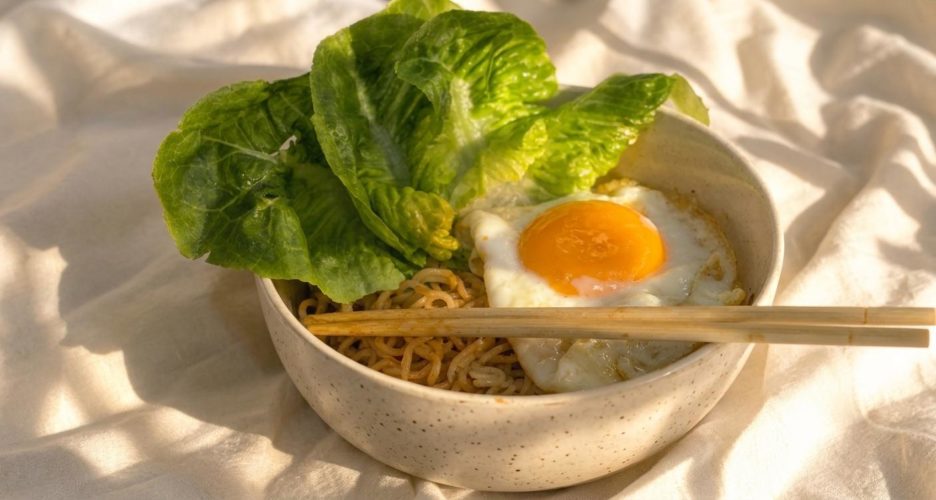
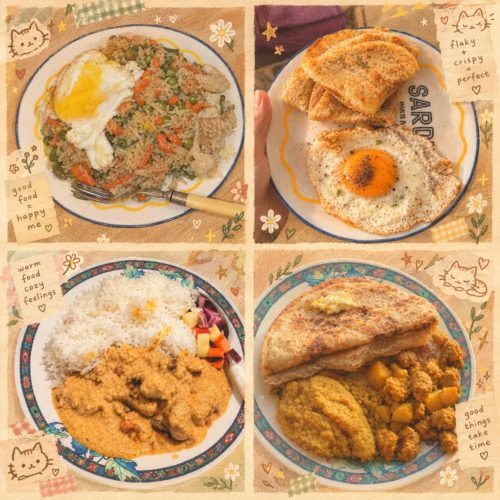
And then there are eggs. For many students, eggs become one of the most reliable companions in the kitchen. A sunny side up with toast, scrambled eggs with avocado, or a simple omelette sandwich can turn a rushed morning into something steady.
Even something as simple as a tuna sandwich or eggs with bread can feel enough.
Breakfast, I realised, is not about perfection. It is about building a foundation towards a healthy lifestyle.

Lunch: Building structure in the middle of the day
By the time afternoon arrives, your energy begins to shift, and lunch can be more than just a meal. It’s a pause.
For many of us, rice becomes a constant. Rice with paneer curry, rice with mixed vegetables, or something as simple as dal and rice carries a sense of familiarity that is difficult to replace.
Paratha with achar and curd, or even a quick vegetable sandwich, is a small reminder of home.
If you follow a vegan diet, rice with lentils and vegetables or stir-fried vegetables with noodles offers both comfort and simplicity. Chickpea salads or avocado sandwiches are quick, filling options between lectures.
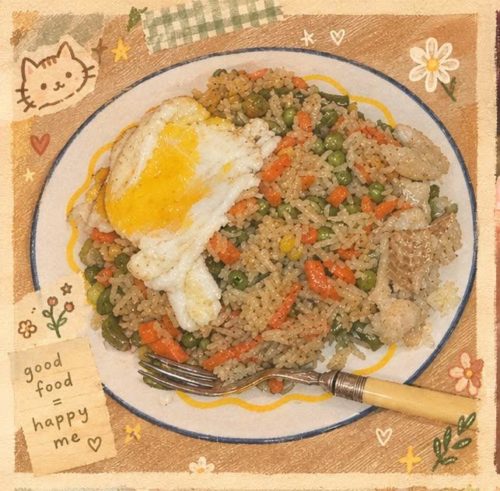
Egg-based meals also become essential. Egg curry with rice, egg fried rice, or even boiled eggs with a simple salad offer both nutrition and ease.
And for those who include meat, chicken curry with rice, tuna sandwiches, or quick chicken stir-fries become part of everyday life.
Lunch, in many ways, becomes the anchor of your day.
Snacks: The small moments in between
Day-to-day student life is shaped not only by meals, but by the moments in between.
Snacks become those small pauses in a long day. A bowl of yogurt with fruit. A handful of chips. An apple picked up on the way to the library. Sometimes even cake, just because you need a moment of comfort, or maybe some popcorn to watch a movie with.
For some, it is smoothies or nuts and seeds. For others, it is something as simple as a boiled egg or an egg sandwich.
Tea and coffee begin to appear more frequently than expected. Not just as drinks, but as quiet rituals. A way to pause. A way to reset.

Dinner: Ending the day softly
Evenings in Exeter carry a different kind of stillness.
Dinner often becomes simpler, softer.
A warm bowl of soup with bread. Rice with mixed vegetables. Paneer with roti. Or something as gentle as khichdi, especially on days when you need comfort more than anything else.
For vegan options, vegetable soups, lentils with rice, or tofu stir-fries become easy, nourishing choices.
Egg meals return again, in the form of omelettes or egg curry, offering something familiar at the end of the day.
And for those who prefer non-vegetarian meals, grilled chicken, salmon with vegetables, or even a simple chicken soup can feel grounding.
Protein: The quiet foundation
One of the most important lessons I learned was the importance of protein. Not in a complicated, technical way, but in a practical one.
Paneer, lentils, chickpeas, milk, and yogurt can be essential for vegetarian diets. Tofu, beans, and peanut butter support vegan routines. Eggs, in all their forms, are one of the most versatile and affordable options.
And for non-vegetarian meals, chicken, tuna, and salmon provide simple and reliable sources of nutrition.
These are not just ingredients. They are what sustain you through long days, assignments, and everything in between.
Meal planning, batch cooking & budgeting
What I slowly realised is that eating well in Exeter does not have to be expensive. With a little planning, most meals can cost between £1 and £2, and a full day of eating can often stay within £5 to £7. It is not about limiting yourself, but about learning how ingredients work together, how meals can be stretched across several days, and how small habits make a big difference over time.
One of the things that helped me most was cooking in batches. If I made a pot of curry, lentils, pasta sauce, or soup, I would prepare enough for two or three meals rather than just one. Some portions would stay in the fridge for the next day, while others could be frozen for busier weeks when I did not have the time or energy to cook.
I also found that preparing ingredients in advance made everyday cooking much easier. Washing and chopping vegetables after a grocery trip, cooking a larger portion of rice, or boiling a few eggs ahead of time meant that meals came together quickly after a long day of lectures and reading. On particularly busy days, having something ready in the fridge often stopped me from spending money on takeaway food.
Over time, I realised that cooking was no longer just a way of saving money. It became a routine that brought structure to my week. There was something reassuring about knowing that dinner was already prepared, that there was a meal waiting after a long day, or that lunch for the next day was already packed away. In that sense, cooking became less about cost and more about balance, between comfort, nutrition, independence, and the small rhythms that slowly make a new place feel like home.
Exploring Exeter through grocery shopping

One thing nobody told me before moving to Exeter is that grocery shopping can become surprisingly fun.
What started as a weekly necessity has somehow turned into one of my favourite little outings, especially when I go with friends. These days, wandering through Morrisons, Sainsbury’s, Lidl, Aldi, Poundland, Iceland, and Tesco feels a bit like exploring a giant playground. You never quite know what you are going to find.
One of my favourite things is hunting for reduced-price items. Sometimes you’ll spot perfectly good sandwiches, salads, bakery items, fruit, vegetables, or ready meals at significantly marked down prices, simply because they need to be sold that day. If you know you’ll eat them within a day or two, they can be fantastic bargains and a great way to stretch your budget.
I probably visit Tesco more than any other shop, partly because I am often near the city centre. It has become a bit of a habit to pop in and see what is available. More than once, I have walked out with something I had not planned to buy simply because it was on a great offer.
And here is a little student secret: keep an eye out for special discount days and loyalty offers. For example, Iceland has a 10% student discount on Wednesdays, so don’t forget to bring your student ID!
So while budgeting is important, I have found that shopping in Exeter is not just about saving money. It is also about exploring, discovering new foods, sharing recommendations with friends, and occasionally finding an unexpected bargain that makes your entire day.
Meal cost breakdown
By now, you’ve probably realised that there is no single “right” way to eat as a student. Some weeks you’ll have plenty of time to cook, while other weeks you’ll be relying on quick meals between lectures, assignments, and everything else that comes with university life.
The ideas below are not meant to be a strict meal plan, but rather a collection of simple, affordable, and flexible options that I have found helpful while living in Exeter. Whether you’re vegetarian, vegan, eggetarian, or non-vegetarian, feel free to mix and match these meals to suit your own routine, preferences, and budget.
I’ve included estimated meal costs to help make planning your weekly shop a little easier.
🌅 Breakfast 
| Meal | Cost per serving |
| Oats with milk/plant-based milk, banana, and a little honey | ~£0.60 |
| Cereal with milk and chopped fruits like apple or banana | ~£0.90 |
| Toast with butter and jam | ~£0.50 |
| Pancakes with fruit or syrup | ~£1.00 |
| Smoothie made with milk, banana, oats, and peanut butter | ~£1.00 |
| Peanut butter and banana sandwich | ~£0.70 |
| Eggs (fried/boiled/scrambled) on toast | ~£0.80 |
🍛 Lunch
| Meal | Cost per serving |
| Simple dal and rice | £0.80 |
| Rice with paneer, egg or chicken curry | ~£1.80 |
| Vegetable stir-fry with rice or noodles | ~£1.20 |
| Egg fried rice | ~£1.00 |
| Salad with chickpeas, beans, boiled egg, or tuna | £1.20–£1.50 |
| Sandwich with tuna, chicken or avocado | ~£1.20 |
🍿 Snacks
| Snack | Cost |
| Fruit (apple/banana) | ~£0.30–0.50 |
| Yogurt with fruit | ~£0.80 |
| Chips/crisps | ~£1.00 |
| Boiled eggs | ~£0.50 |
| Nuts (small portion) | ~£0.70 |
🌙 Dinner
| Meal | Cost per serving |
| Soup with bread | ~£1.00 |
| Rice with mixed vegetables | ~£1.20 |
| Paneer with roti or rice | ~£1.80 |
| Stir-fried tofu with vegetables | ~£1.50 |
| Egg fried rice | ~£1.20 |
| Grilled chicken with rice or bread | ~£2.00 |
| Salmon with vegetables | ~£3.00 |